
Solar Validation
OVERVIEW
Solar Validation focused on improving how Distributed Generation (DG) customers interact with solar-related workflows within the digital experience. The work validated and refined existing designs to support clearer, more consistent, and more guided interactions across key solar flows.
The goal was to help DG customers in MA and NY submit, review, and track solar allocation requests (such as Schedule Z or CDG net crediting) more easily. This work aimed to reduce confusion by creating a clearer, more guided submission and review experience.
ROLE AND DURATION
Product designer
January 2025- January 2026
Overview | Preface | Product Context | Phase 1 | Phase 2 | Looking Ahead
PREFACE
Setting the Stage
Although I wasn’t involved in the initial discovery or user testing phase, I joined the Solar Validation effort during the handoff of existing lo-fi and hi-fi wireframes screens. These were built by another designer and tested with target users to understand core validation pain points. My focus began when the scope changed significantly affecting both the architecture and expected feature set and I was brought in to support and refine the UI layer amid evolving tech feasibility.
PRODUCT CONTEXT
Bringing Clarity to a Complex Solar Allocation Process
Background: Solar host customers are responsible for allocating solar credits across multiple accounts, a process that directly impacts billing accuracy and financial outcomes. This workflow relied on manual steps, external files, and complex state-specific rules, making submissions time-consuming and error-prone.
Key Challenges:
The process is time-sensitive, constrained by strict submission windows, and varies significantly by state, increasing the likelihood of errors, rework, and missed deadlines.
• Selecting the correct form and program
• Understanding state-specific rules (e.g., NY vs MA)
• Repeating redundant tasks across submissions
• Limited visibility into submission status
• High reliance on manual processes and external files
Constraints:
• Submissions limited to once per month (NY) or 6 times per year (MA)
• Submissions restricted to specific windows around meter read dates
• NY allocation rules significantly more complex than MA
• Technical and platform constraints within MBA
PHASE 1
Initial Allocation Hub Concept
Solar Validation initially explored a centralized submission hub for solar host customers, allowing users to copy from a past submission, update allocation details, and submit changes in one place. The concept focused on reducing friction for repeat submissions and improving visibility into submission status. As the project evolved, technical and product constraints required the team to pivot away from a fully centralized hub approach.
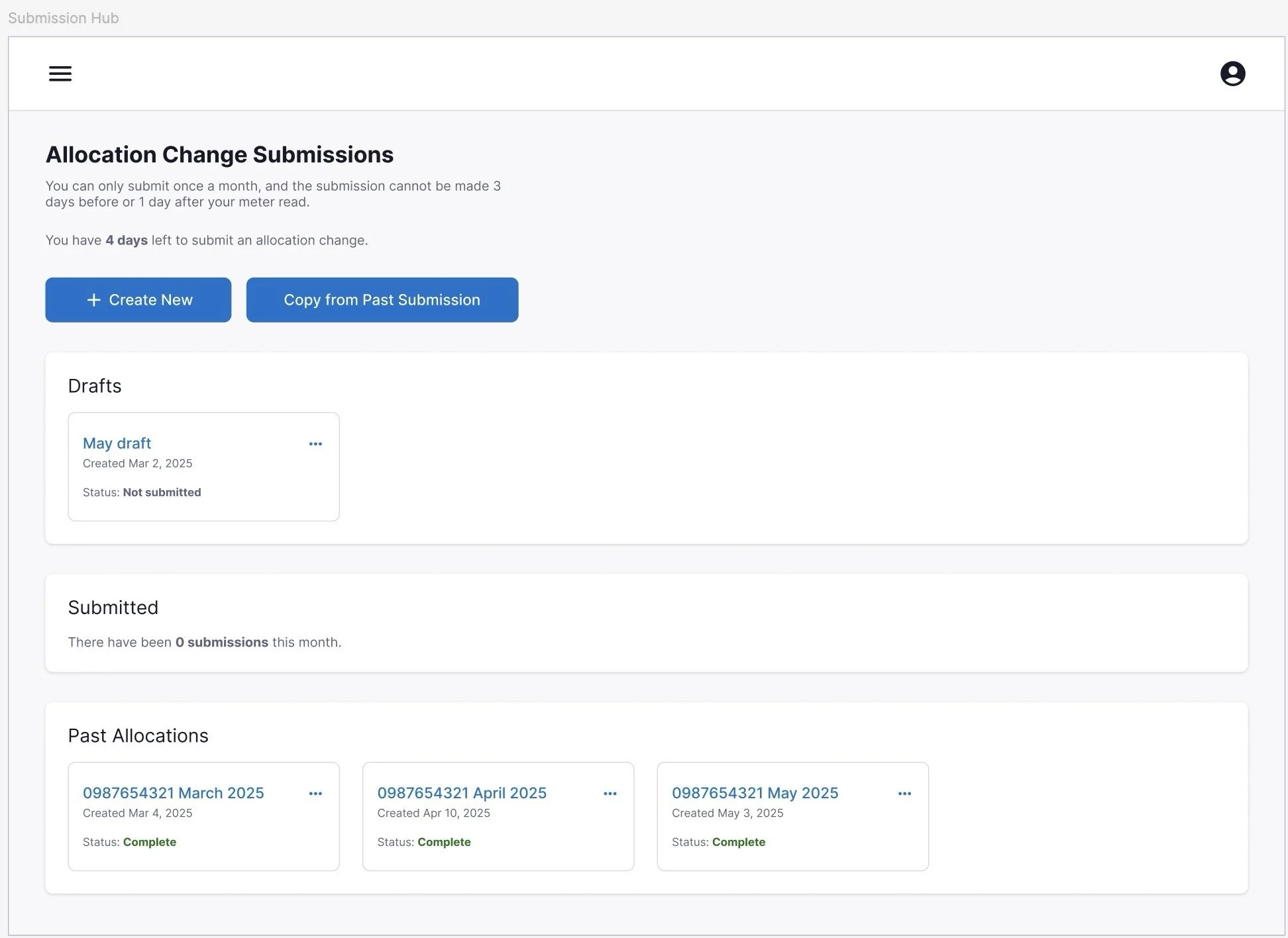
Allocation Request Hub (out of scope):
• Centralized past, draft, and new submissions so users didn’t have to remember where they left off
• Gave clearer visibility into submission status across months, lowering uncertainty and duplicate submissions
• Reduced repeat work by allowing users to start from a previous submission instead of re-entering data
PHASE 2
Focus Area 1: Managing a Large, High-Risk Allocation Form
In Phase 2, the experience moved toward a guided flow where users can navigate to the DG credits tab within My Business Account (MBA) to complete their allocation form. This adjustment balanced feasibility with the need for a clear, understandable user experience.
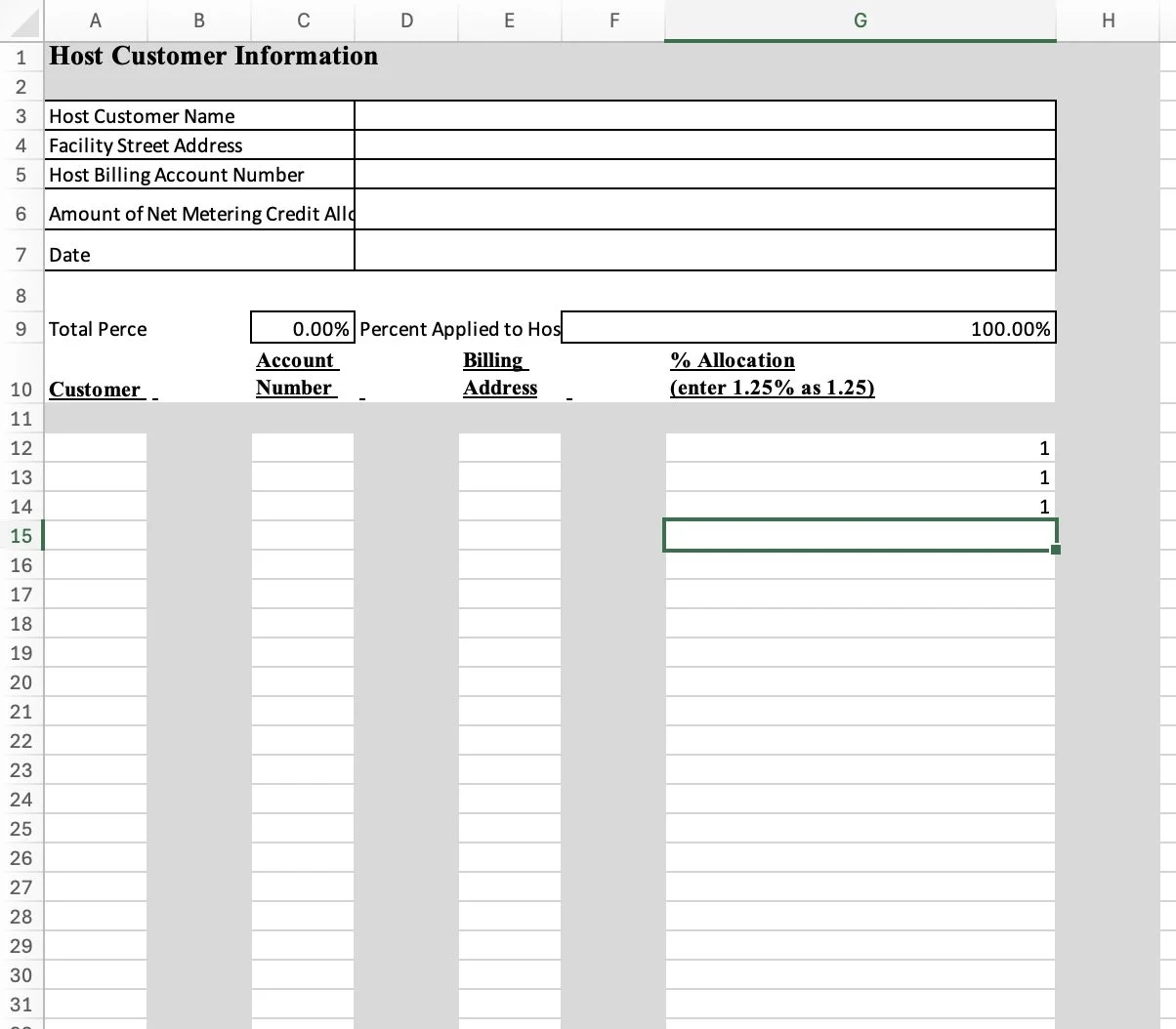
Previous Excel Form:
• Required users to manage complex allocation data across large tables
• Relied on manual checks and external review cycles, increasing cognitive load
• Made it easy to lose place or miss errors during entry and review
While more advanced table interactions were explored, the MVP prioritized patterns that would keep users oriented, accurate, and confident when working with large allocation tables.
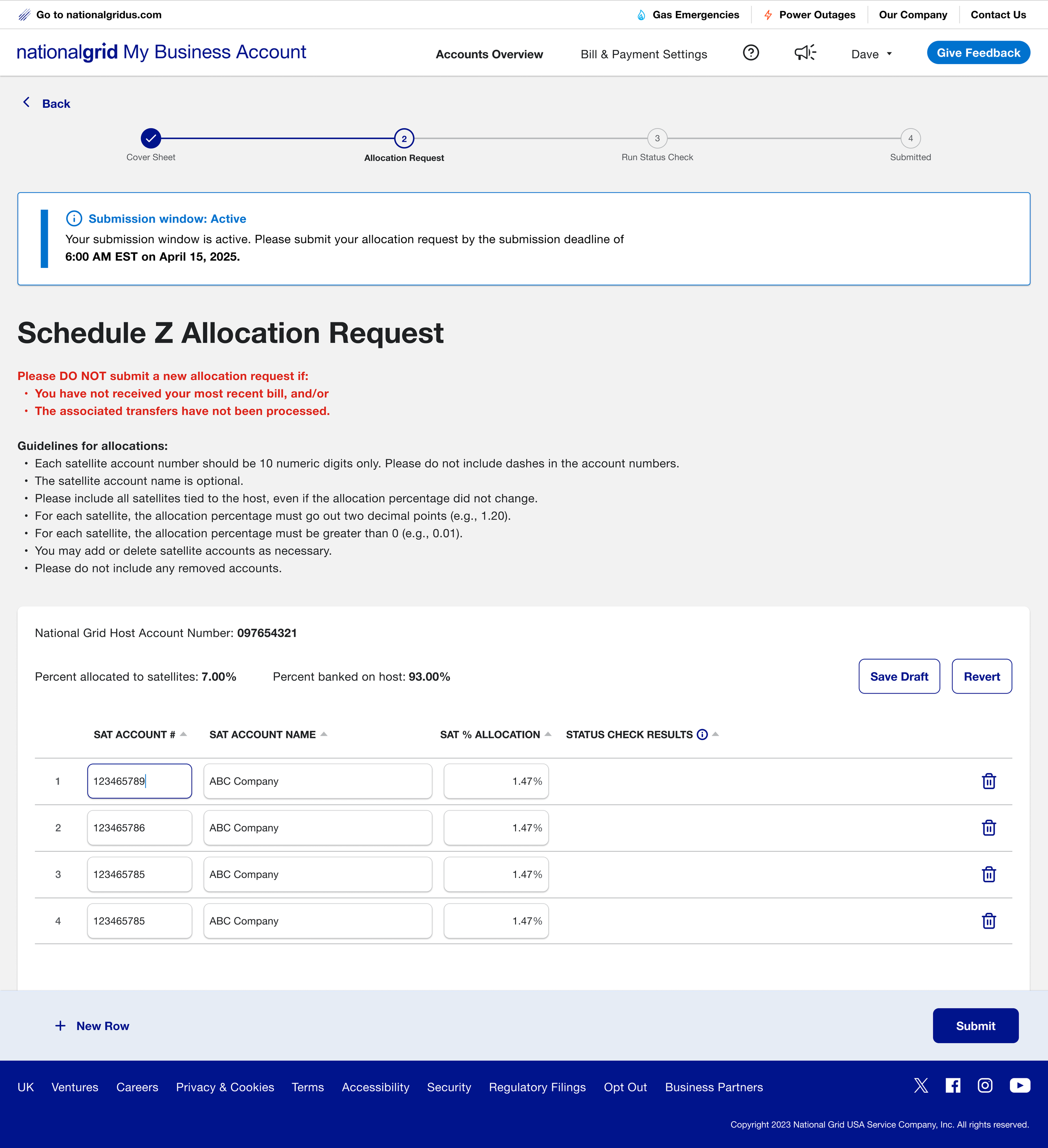
Final Allocation Request Form:
• Replaced Excel workflows with an in-product form designed for managing complex allocation forms
• Improved focus and orientation as users move between rows and fields
• Allowed users to save progress and safely recover from changes
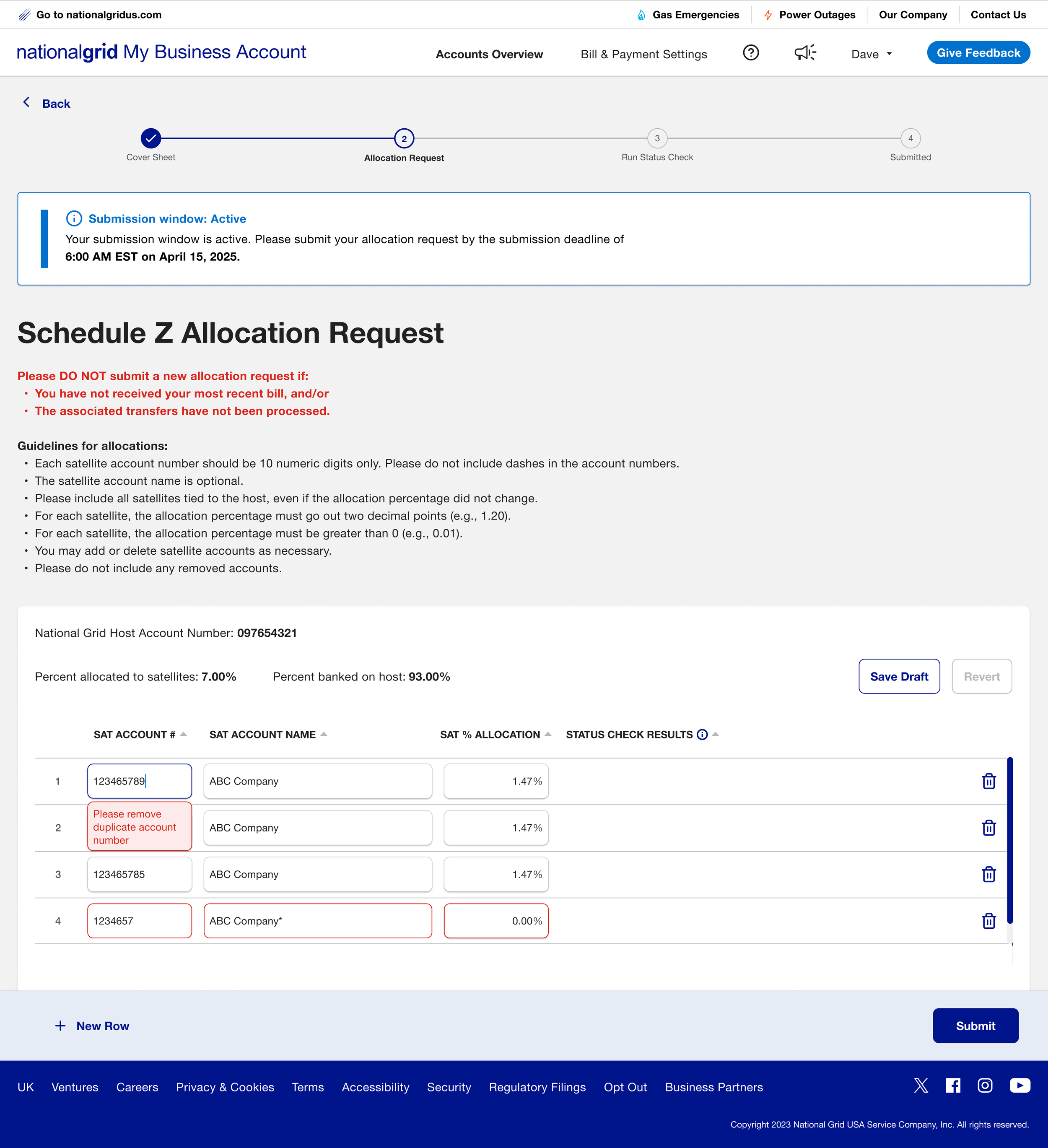
Inline Validation:
• Gave users immediate feedback while entering allocation data instead of after submission
• Helped users quickly see which entries needed attention without scanning the entire table
• Reduced rework by allowing corrections to happen in place, as users worked
Focus Area 2: Submission Clarity and Recovery
Allocation forms follow strict submission windows and may require follow up review steps. Without clear feedback, users could feel unsure about when they can submit, what happens after submission, or how to undo changes if needed. This focus area clarified those moments to support confident submission and safe recovery.
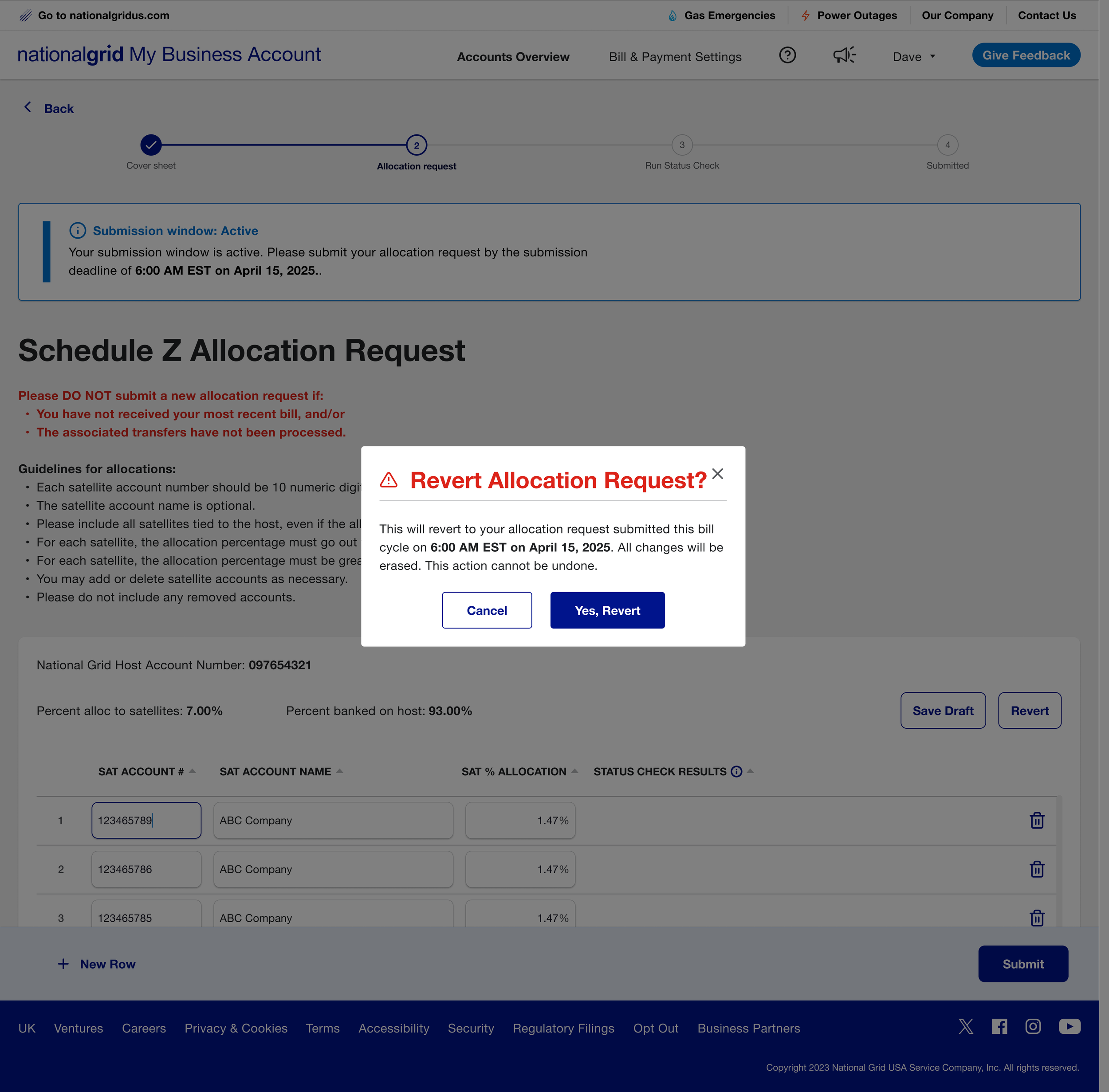
Revert Modal:
• Prevented users from accidentally losing valid allocation data
• Clearly explained what would happen before undoing changes
• Gave users confidence to recover from mistakes without fear of irreversible loss
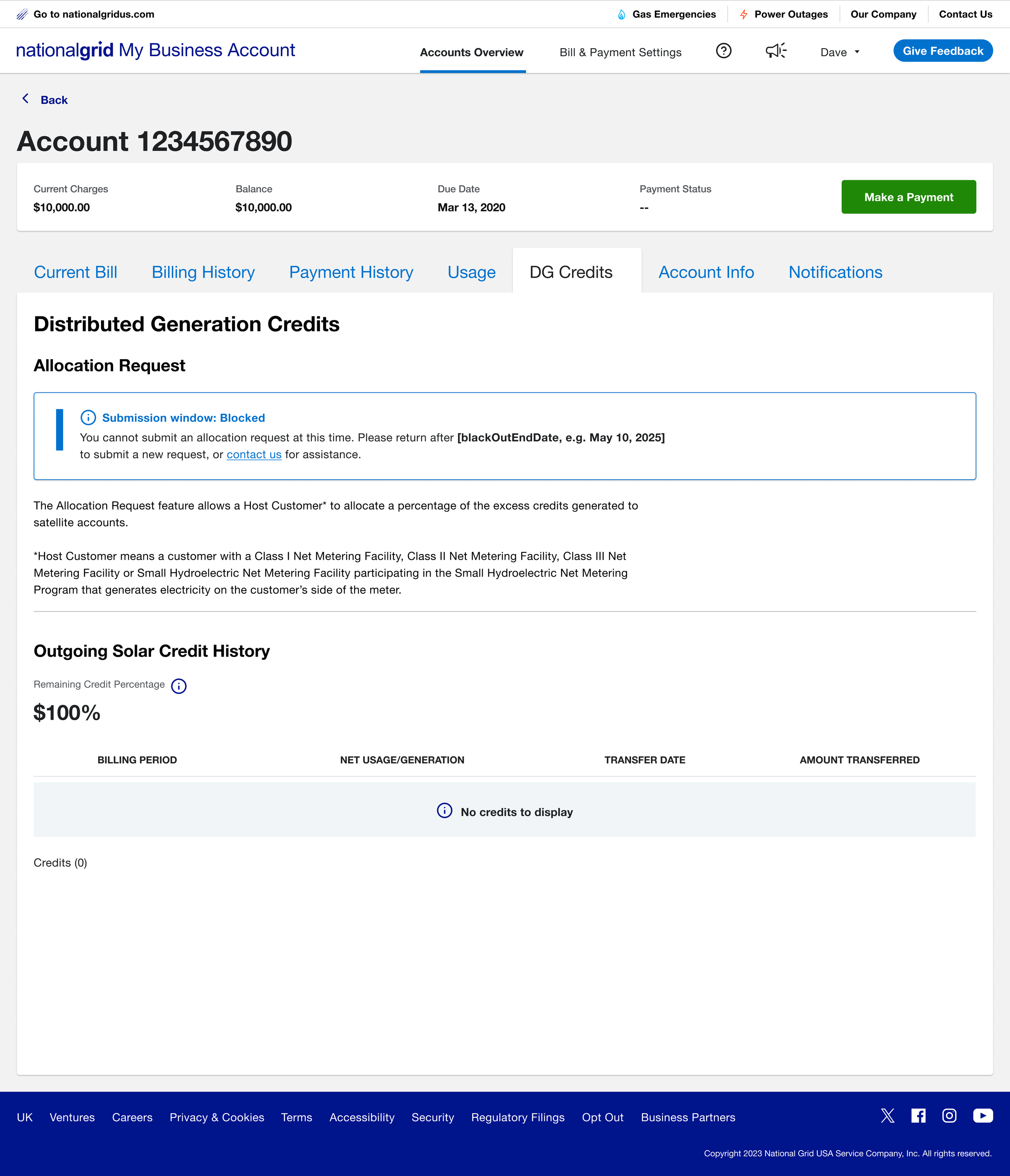
Submission Window Blocked:
• Clearly communicated when submissions were unavailable and when users could return
• Removed the entry point to prevent users from starting an action they couldn’t complete
• Reduced confusion and unnecessary retries during restricted submission periods
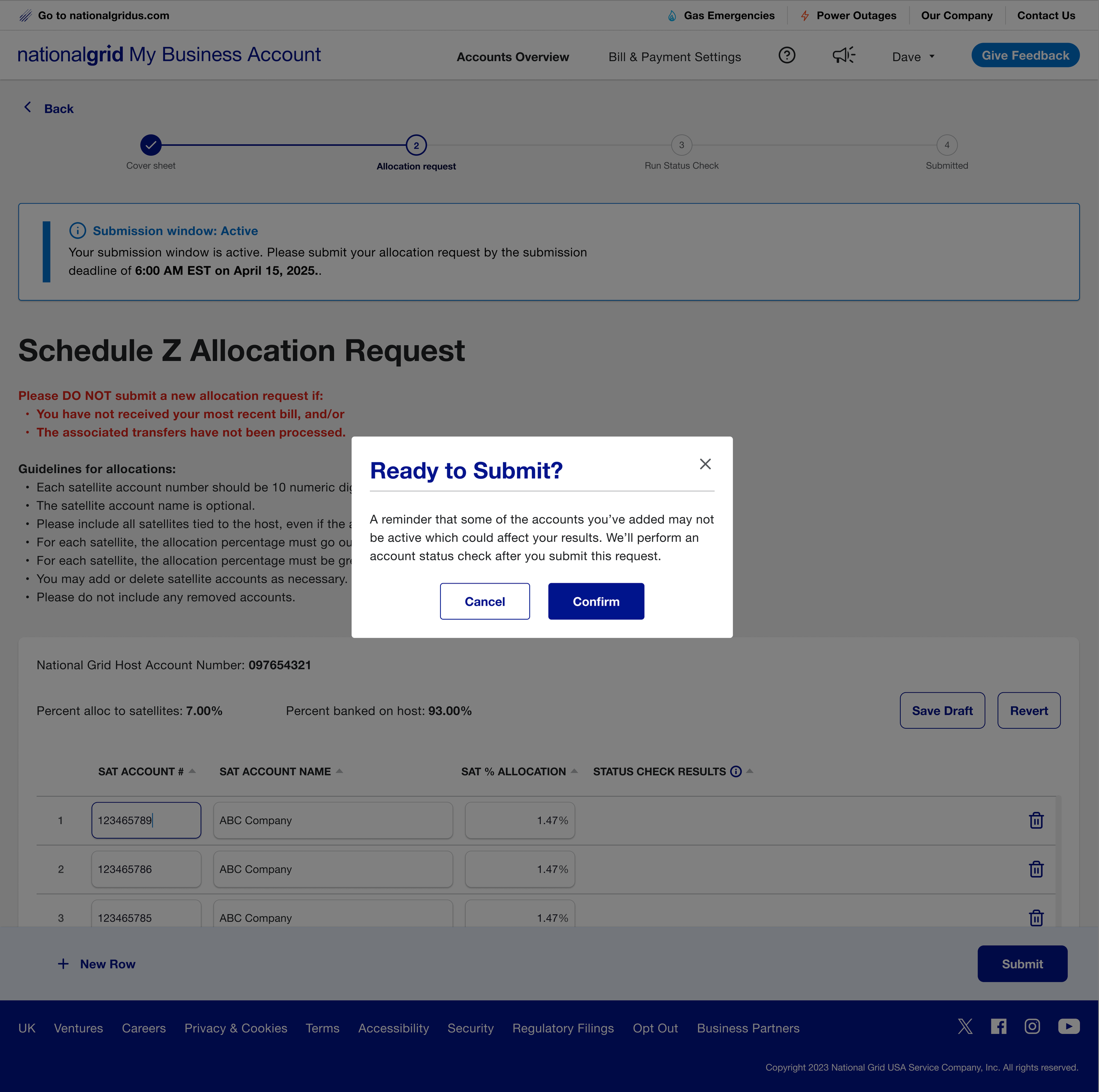
Ready to Submit Modal:
• Helped users understand what would happen after submitting their allocation request
• Set expectations that some entries might not pass validation
• Reduced surprise and confusion when results were returned
Focus Area 3: Post Submission Feedback
Once an allocation request form is submitted, users need clear feedback on its status and next steps. Since validation happens in the background, the experience focuses on making system states visible and preventing unnecessary or duplicate actions.
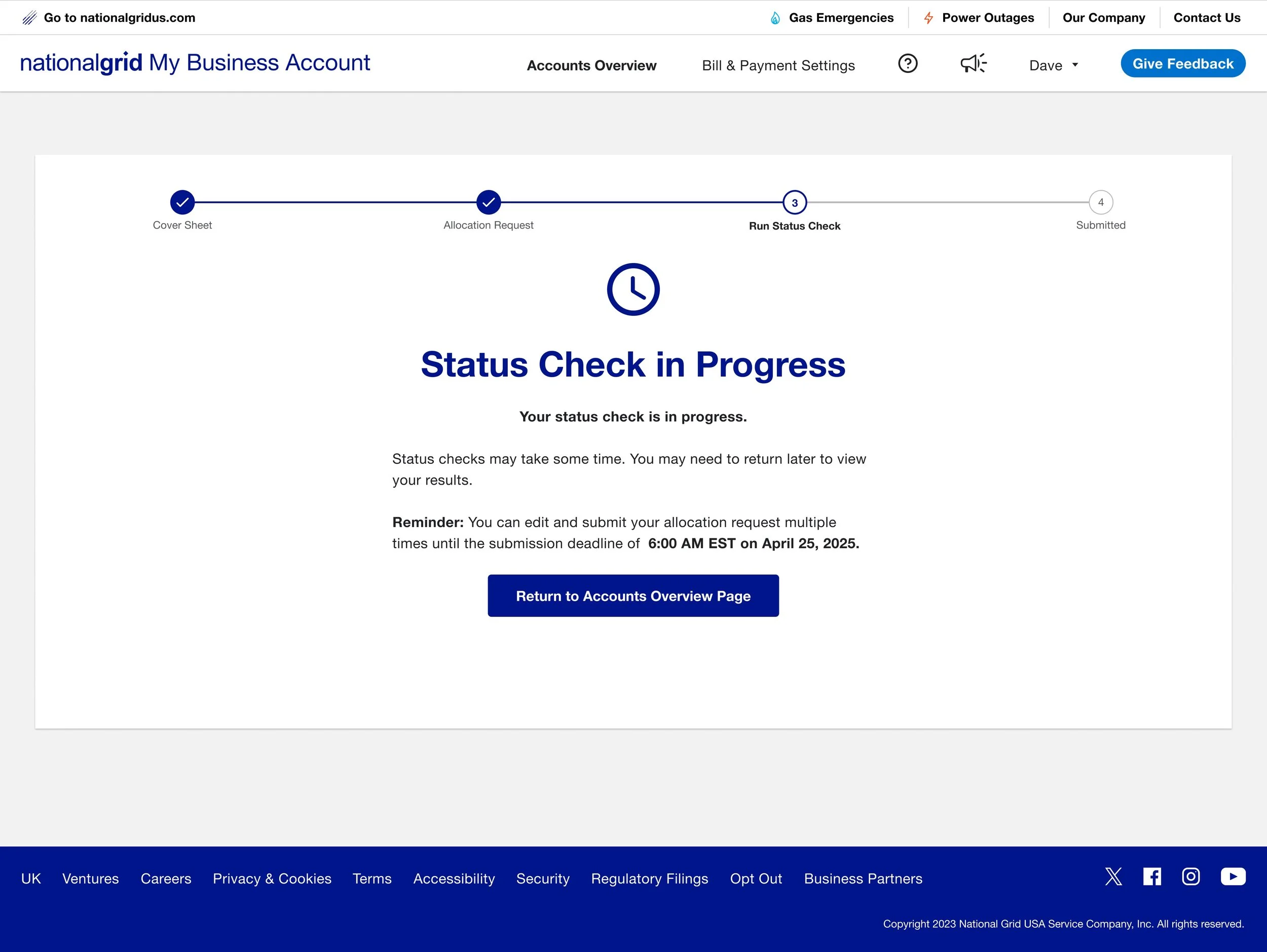
Run Status Check:
• Provided visibility to system status by communicating that validation was in progress
• Set expectations that results might take time and could require returning later
• Provided clear system status to reduce uncertainty and repeated submissions
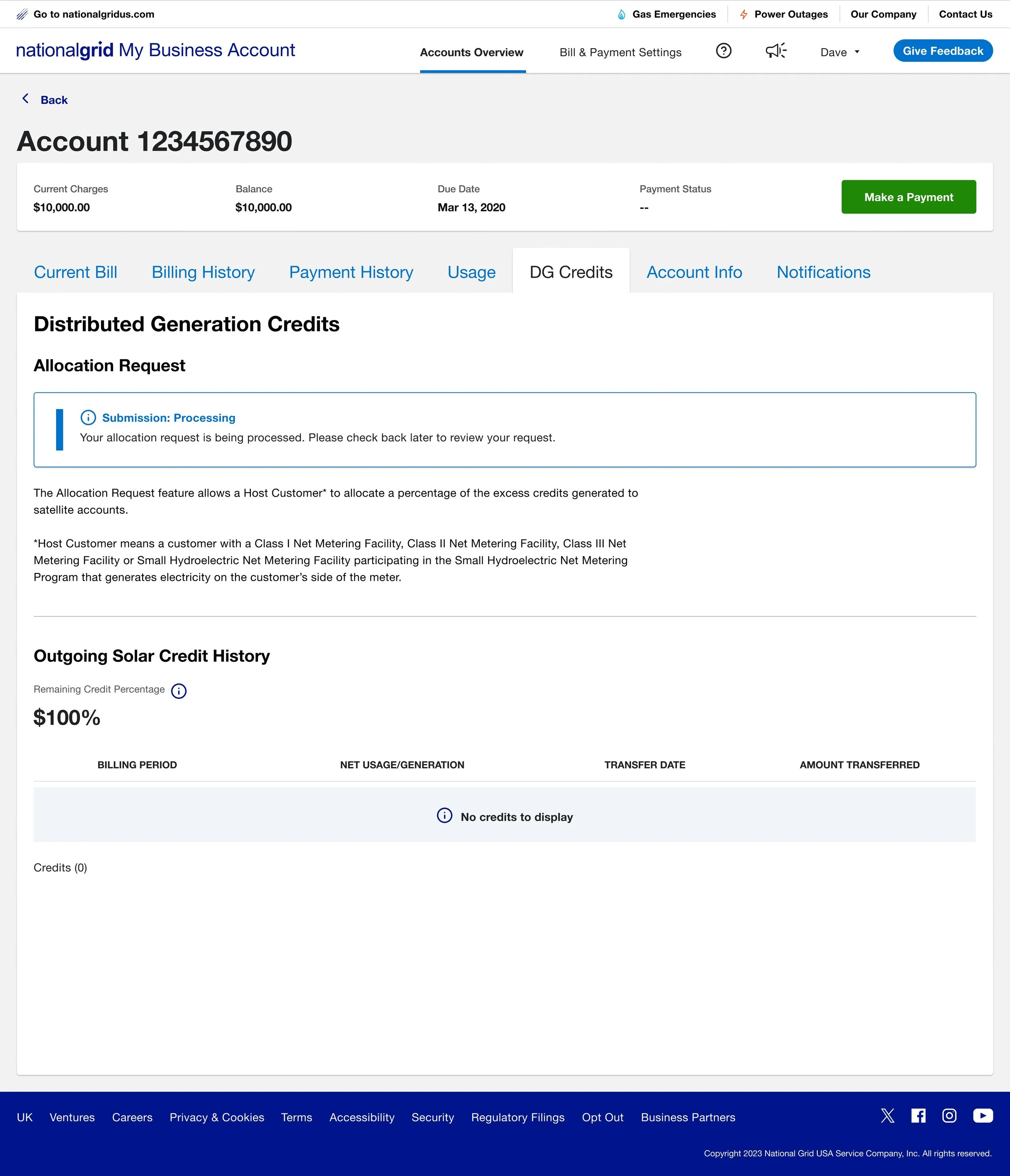
Processing State:
• Visibility of system status: Indicates that processing is underway
• Prevented changes while the request was being processed
• Reduced confusion by showing progress instead of leaving users guessing about the state of their form.
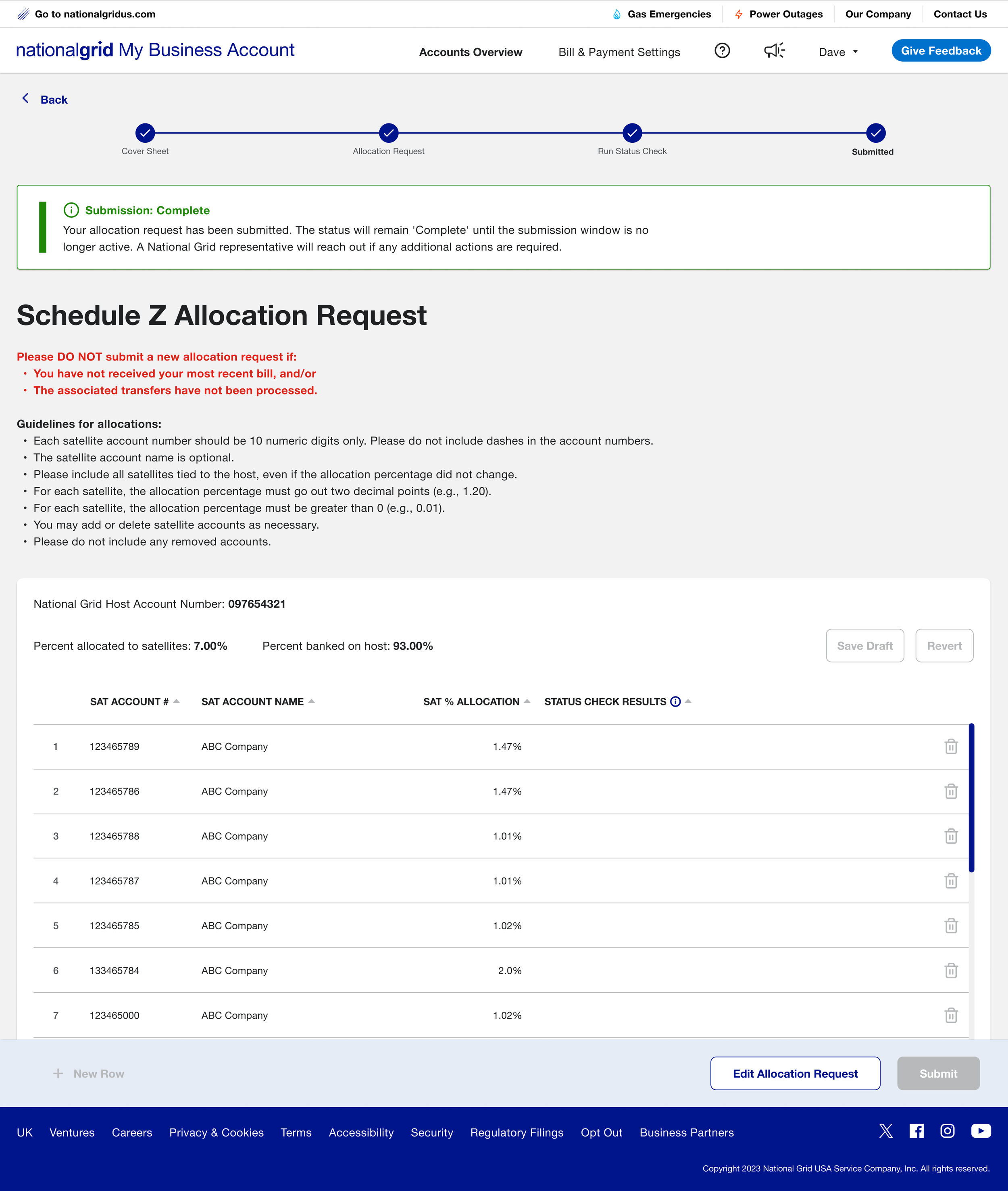
Completed State:
• Visibility of system status: confirmed that the allocation request was successfully submitted
• Disabled submit button to prevent accidental edits after submission
• Provides the option to edit when the submission window was still open, giving users flexibility to make updates
LOOKING AHEAD
Deployment and Next Steps
Community Solar Credit Allocation launched on January 26, 2026 as an MVP pilot, allowing select Massachusetts solar developers to submit monthly credit allocations directly through My Business Account. The pilot focuses on reducing manual processing and giving users clearer visibility into submission timing, status, and outcomes. Feedback from this rollout will inform expansion to additional accounts and future enhancements to the broader solar experience.